My last blog post was in February 2017. Nine years ago.
It wasn’t intentional. I didn’t wake up one day and decide to stop writing. I just… didn’t start the next post. Then a month passed, then a year, then almost a decade. The classic // TODO: write blog post that never gets resolved.
What happened
Life happened — and it was a busy one.
When I wrote that last post about PgBouncerHero in 2017, I was at Instacart as one of their early SREs, building the infrastructure that took the platform from thousands of orders a week to millions.
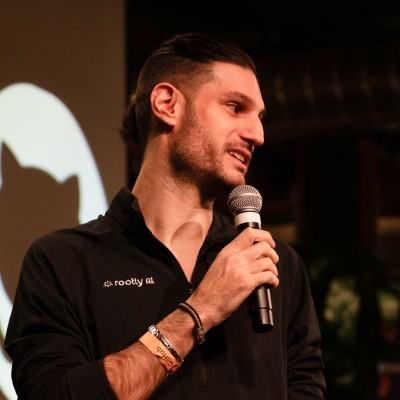
After that came PopSQL (YC S19). Then in 2021, I co-founded Rootly (YC S21) with JJ Tang — an AI-native incident management platform now used by teams at NVIDIA, Squarespace, Canva, and Figma. I’ve been serving as CTO & CISO , and we’ve raised $15.2M from Renegade Partners, Google Gradient Ventures, and XYZ Ventures.
So I wasn’t idle. I just wasn’t writing.
Part of it was simply not having the bandwidth. But part of it was friction: the blog ran on Octopress 2.0
, which itself ran on Jekyll 0.12 and Ruby 2.7. Every time I thought about writing, I’d first think about the bundle install that would inevitably fail, the outdated gems, the Rakefile I’d have to debug. When you spend your days firefighting production incidents for a living, the last thing you want is to debug your own blog’s build system.
So the blog sat there. Gathering dust. Still serving pages from a docs/ folder committed to the repo like it was 2012.
What changed
LLMs.
Not as a topic to write about (though there’s plenty to say), but as a way to work. The thing that brought this blog back to life wasn’t inspiration — it was capability.
I’d been wanting to migrate off Octopress for years. The checklist was long and tedious — converting posts, cleaning up legacy HTML, fixing broken links, setting up a new theme, configuring deployment. The kind of work that’s not hard, just endless. And that’s exactly why it never got done.
With Claude Opus 4.6 as a collaborator that didn’t mind the tedious parts, together we:
- Migrated 31 posts from Octopress (Jekyll + Liquid) to Hugo with clean Markdown
- Converted legacy HTML to proper Markdown in 17 older posts that were full of raw
<div>tags - Set up Hugo Narrow with the Dracula color scheme and dark/light mode
- Built Python tooling for creating new posts with AI-generated cover images
- Added CI/CD with GitHub Actions — linting, link checking, Hugo builds, automated deployment
- Generated cover art for every post using Gemini 2.5 Flash ’s image generation
- Cleaned up everything — removed 166 unused WordPress thumbnails, normalized image paths, upgraded links to HTTPS, losslessly compressed all images
Work that would have taken weeks of evenings — done through conversation.
The stack now
| Before | After |
|---|---|
| Octopress 2.0 (Jekyll 0.12) | Hugo 0.155 |
| Ruby 2.7 + Bundler | Hugo + uv (Python scripts) |
| Rake tasks | hugo server -D |
Manual deployment to docs/ | GitHub Actions → GitHub Pages |
| No cover images | AI-generated covers via Gemini 2.5 Flash |
| Liquid templates | Hugo shortcodes |
The writing workflow is now: run a script, write Markdown, push. No dependency hell. No debugging a static site generator just to preview a draft.
Why now, really
I’m not going to pretend this is purely about tooling. The tools removed the friction, but the spark is something else.
The way I write code today looks nothing like 2017. At Rootly, we’ve been building AI into our product from the start — AI SRE agents, automated postmortems, intelligent incident routing. I pair with AI models daily. I build things in hours that would have taken weeks. And I have opinions about all of it — about what works, what doesn’t, what people get wrong about AI-assisted development.
Nine years of not writing means nine years of accumulated things to say.
On writing in a language that isn’t yours
There’s another reason I stopped writing that I haven’t mentioned yet: English isn’t my first language. I’m French. And while I can debug a production outage in English at 3am without thinking twice, writing a blog post always felt different. There’s a self-consciousness that kicks in — am I using the right word, does this sentence sound natural, is this idiom actually a thing?
That friction was real, and LLMs removed it entirely. I can think in my own way, express what I mean, and let the model handle the prose. My intent, my ideas, my experience — just sharper prose and no second-guessing.
And honestly, I plan to keep writing this way. Every future post on this blog will likely be prompted and shaped through an LLM. Which raises a question I find genuinely interesting: does it matter?
If you’re reading this through an AI-powered feed reader or summarizer — and statistically, some of you are — then it’s already agent-to-agent. I write with an AI, you read with an AI. The ideas still travel from my brain to yours.
It’s a question of time before this is just how content works. I’d rather be transparent about it now than pretend otherwise.
What’s next
I don’t know the cadence yet, and I won’t promise a schedule I won’t keep. But I want to write about the things I deal with daily — how we use AI in incident management at Rootly, the reality of AI-assisted development beyond the hype, infrastructure patterns that actually scale, and the lessons from nearly five years of building a startup.
The blog is alive, the stack is modern, and the friction is gone. That’s enough to start.
If you’ve read any of my old posts — about PgBouncerHero, or real-time logging with IronWorker, or that time I wrote about backing up Neo4j to S3 — thanks for sticking around. There’s more coming.
Welcome back. Let’s go.
Written with Claude Opus 4.6 via Claude Code . Cover images generated by Gemini 2.5 Flash .